


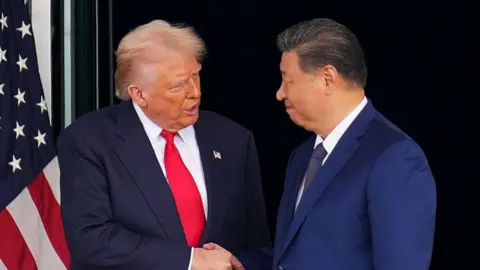
Presidential journeys overseas have typically been an opportunity to showcase the influence of the US on the international platform. Donald Trump's multi-day tour through East Asia, conversely, has been a demonstration of the authority of the president – but also, at moments, of that influence's boundaries.
Trump's destinations in Malaysia, Japan and Korea over the course of the opening phase were an demonstration in pleasing a sometimes mercurial president. It was an recognition that the president, with the stroke of a hand, could impose duties and additional actions that have the capacity to devastate the economies of trade-reliant countries.
His sit-down with Chinese leader Xi on Thursday, nevertheless, was a completely different scenario.
It was a meeting of peers on the world platform, where the consequences for each country – for their financial health, for their world reputation, for the well-being of their people – were immense.
With China, the president may flick his pen, but such actions entail consequences. They come with a cost.
- The US president praises 'amazing' encounter with Xi but no agreement agreed
- Xi and Trump reach short-term ceasefire as Beijing adopts strategic patience
For the first four days, the president's latest venture into international relations was successful.
Each stop was punctuated by a mix of conventional trade negotiations – arrangements made under the shadow of Trump's "reciprocal" taxes – and personal accommodations that at points approached the subservient.
In Malaysia, Trump gained rights to critical minerals and made headway toward completing trade arrangements with regional partners. He also presided over a pact that should alleviate border tensions between Thailand and Cambodia – the type of "truce" the US leader loves to promote.
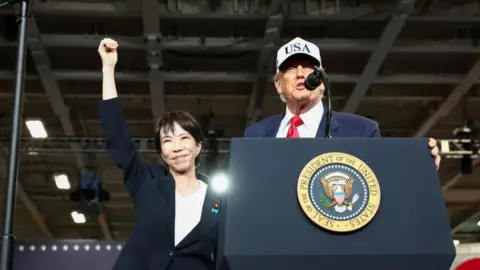
In Japan, Trump's helicopter passed by a landmark tower displayed American colors – with a summit in Trumpian gold.
Newly elected Head Takaichi detailed $half-trillion in Tokyo's funding in the US and presented the US leader a offering of two hundred fifty flowering trees for the United States' semiquincentennial, and a sports gear and bag that belonged to former Prime Minister Abe, the killed former prime minister who connected with the president in his previous administration.
She also became the newest international head to nominate Trump for his highly-coveted international honor.
Matching the effort, Korea greeted Trump with artillery performing a traditional greeting and a service ensemble that performed the presidential anthem and YMCA – the band song that has become a presidential event theme.
Leader the Korean president held an "recognition ritual" for the US leader during which he presented the American leader his country's top honor and a model of an historical royal headpiece.
Midday meal with the Korean leader featured a "Conciliatory Treat" of gold-encrusted brownies. Subsequently, the hosts served the president fine beverage at an exclusive gathering in the president's recognition with half-dozen global figures present at the Asia-Pacific Economic Conference conference.
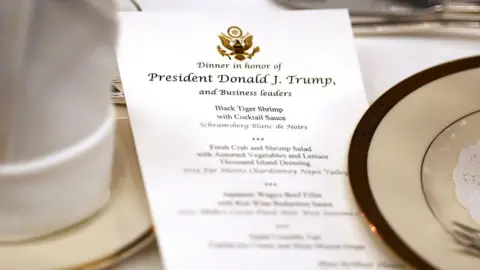
In the US, Trump may be the target of "No Kings" rallies by Americans who disapprove of his authority-expanding increases of executive authority, but during his East Asia tour he was handled as royalty.
And like the rulers of ancient times, Trump came to the Korean nation demanding payment – in the form of $200 billion in cash payments, $20bn a annually, from South Korea to the United States, to be invested at the discretion of the president's administration. Consent on the terms of those payments assisted in that the tariff rate on Korean exports to the United States would drop from twenty-five percent to 15%.
The central moment of Trump's Asia trip took place in its final hours, nevertheless, as he encountered Xi.
At that location, the authority balance between heads of the planet's biggest economic powers was markedly distinct than the meetings the president had with his overseas colleagues in prior visits.
Missing were all the pomp and the spectacle. Lacking armed forces orchestras, without ceremonial troops, missing thoughtfully prepared menus marking mutual national affection. By contrast, the both heads and their senior advisors sat across a long white negotiating table in a nondescript military building just adjacent to the landing strip of the city of Busan's global terminal.
It was perhaps a demonstration of the significant risks that when the president made contact with the Chinese leader in the southern port, he seemed

